Last updated November 22, 2026
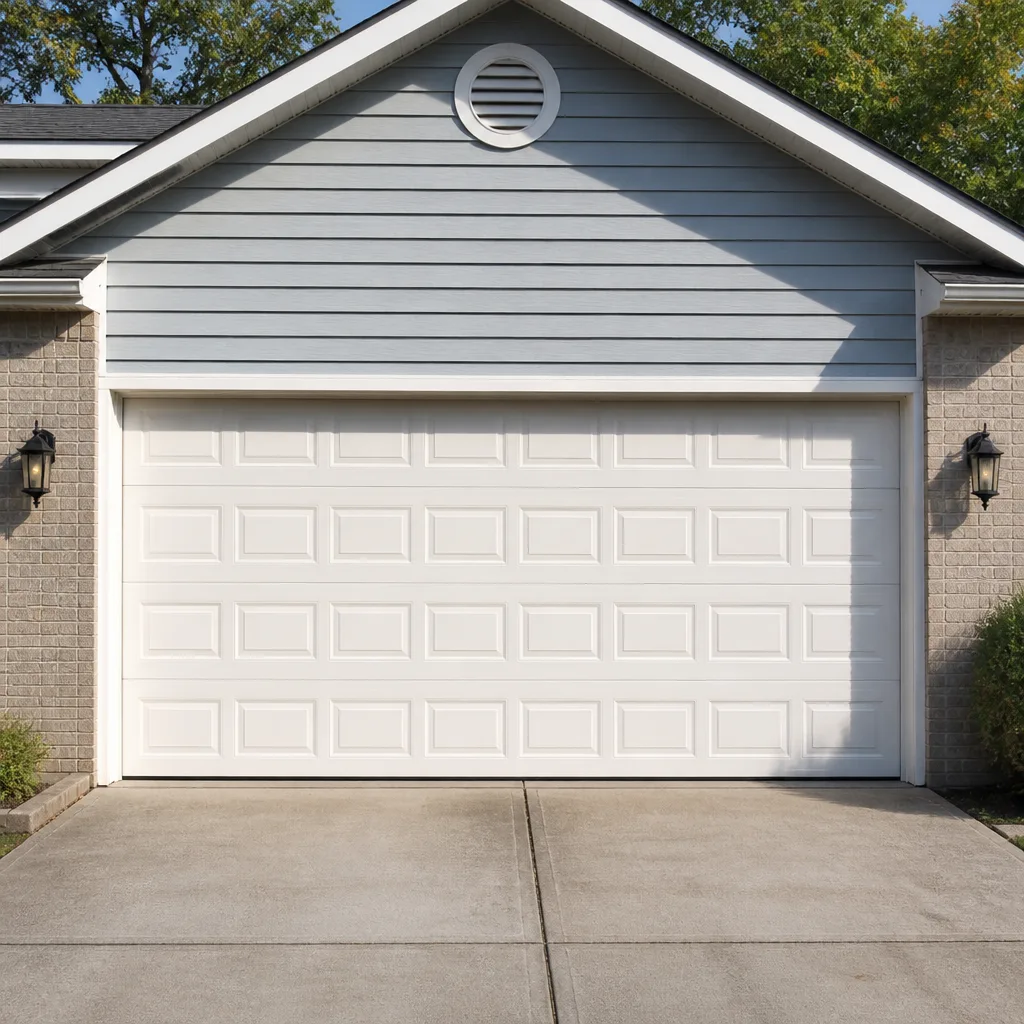 Raised-panel steel
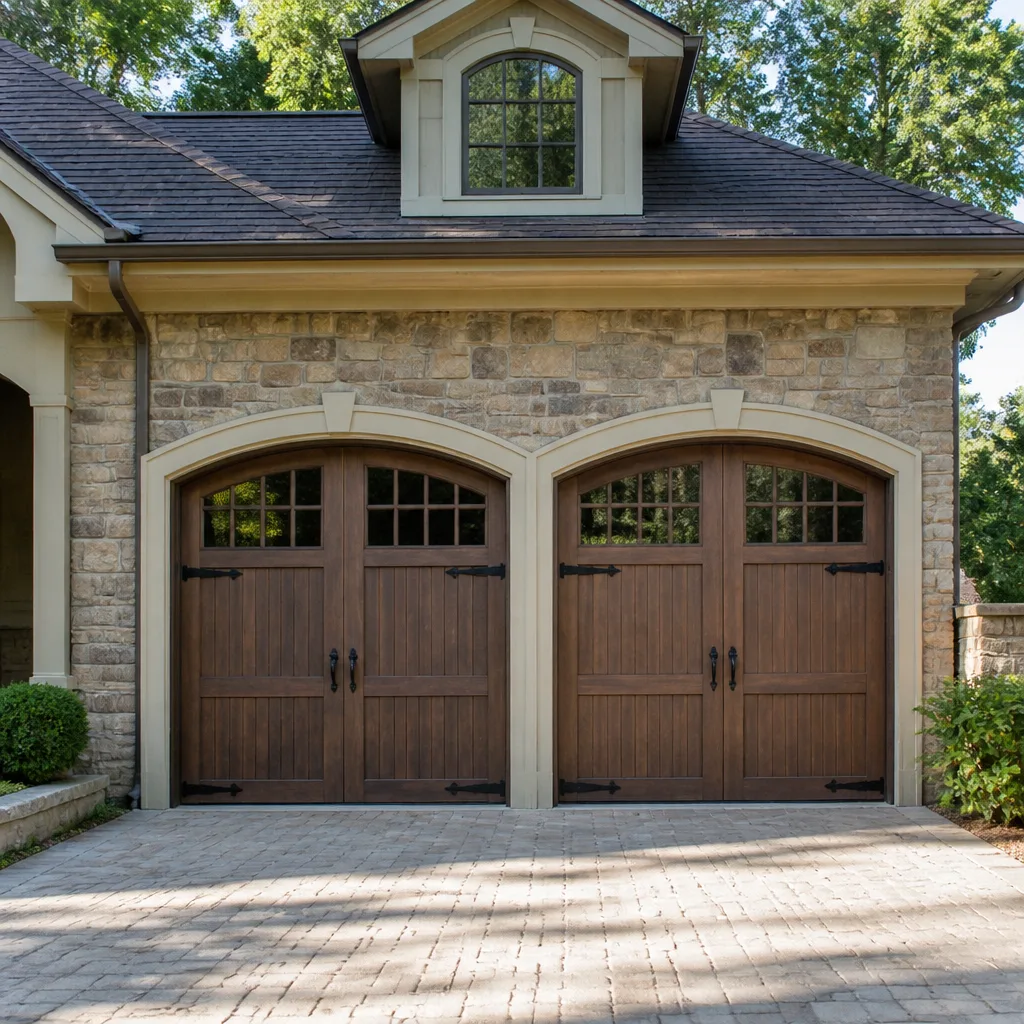 Carriage house
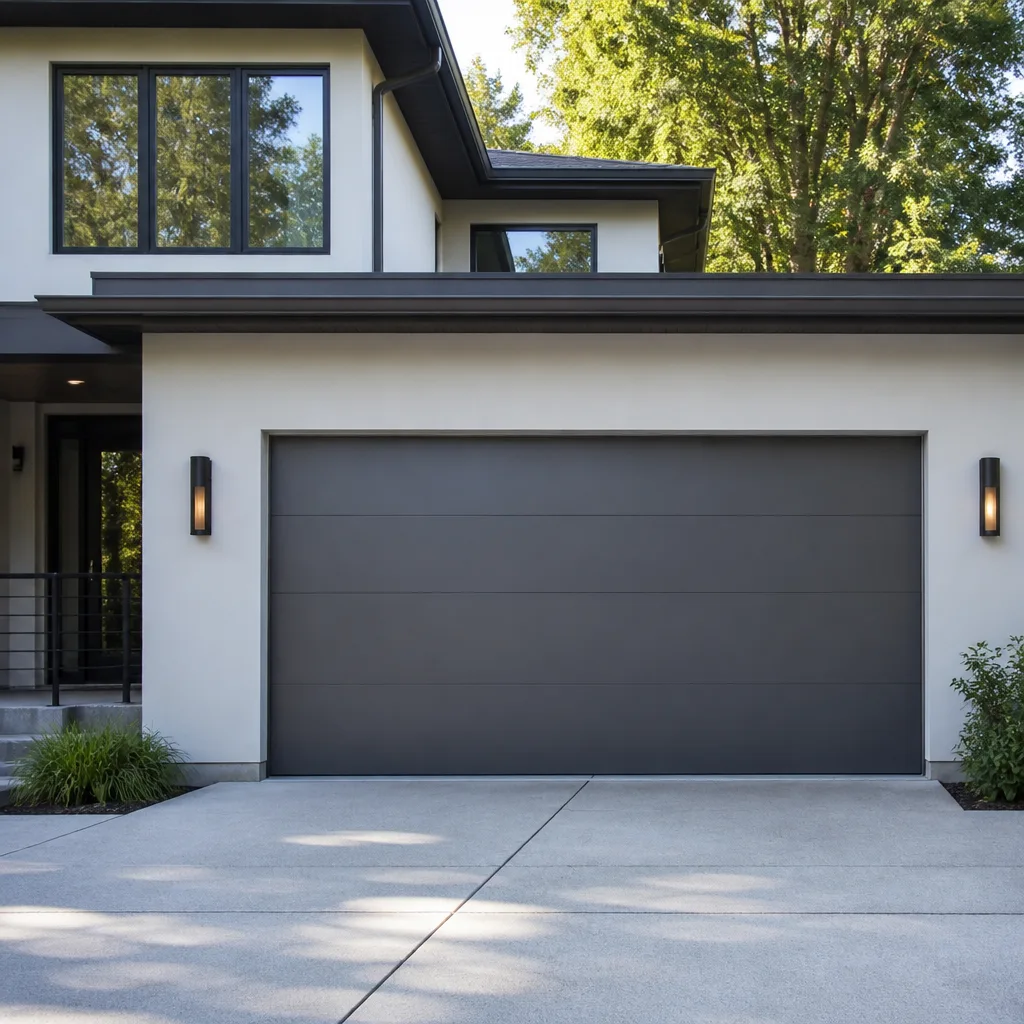 Modern flush
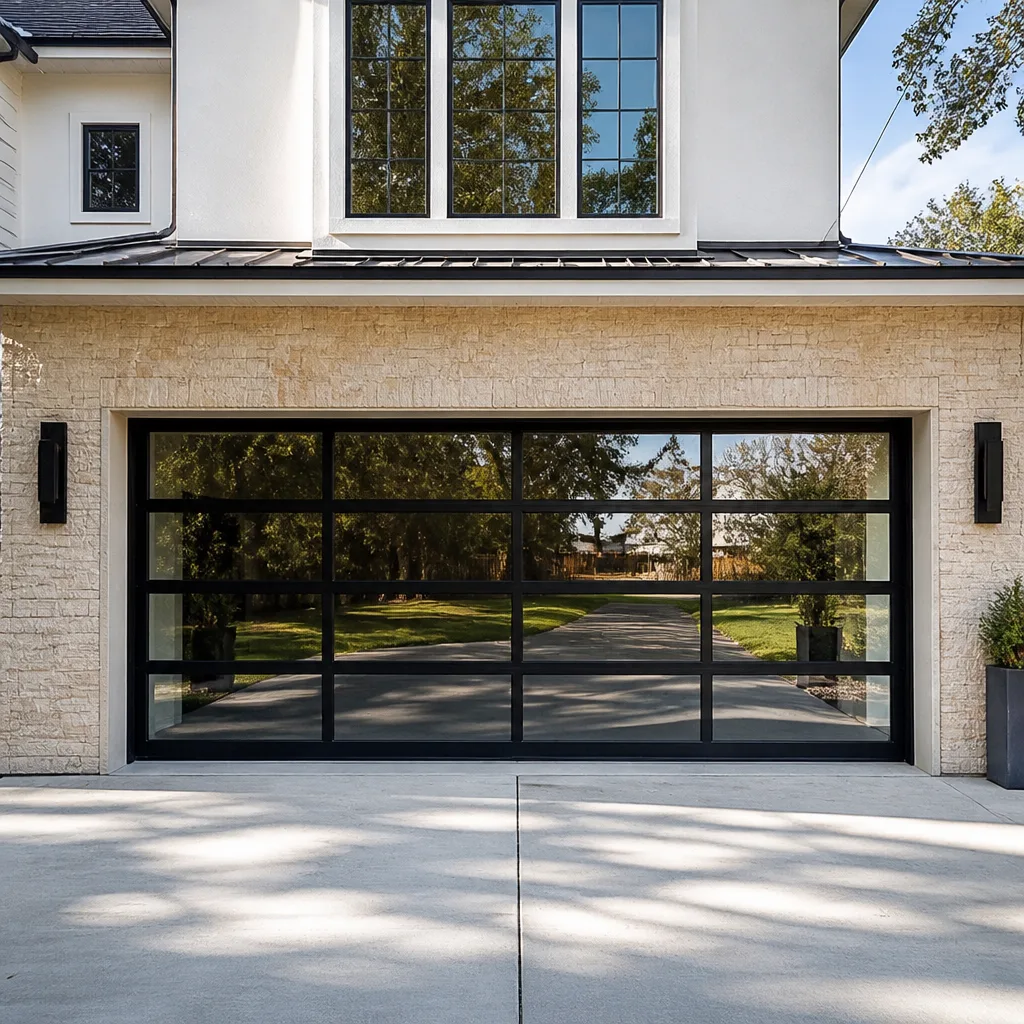 Full-view glass
 LiftMaster openers
 Chamberlain openers
Full 25-point door and opener safety check with every visit - springs, cables, rollers, tracks, and your LiftMaster or Chamberlain opener included
You get a price before we start. It does not change when the pro arrives.
Get your free estimateHow to Hire a Garage Door Contractor in Centreville: A Step-by-Step Guide
Most homeowners shop for a garage door contractor the same way they’d shop for a TV: compare the number at the bottom of the ad. That habit costs people in Centreville real money. Garage door work is one of the few home trades where the low advertised price is often a hook, and where the person who shows up may not be licensed for the work they’re about to do. This guide walks through the questions, documents, and red flags that separate a diagnostic technician from a parts-swapper, so you can hire with confidence before anyone pulls into your driveway.
Quick Answer
Hire a garage door contractor in Centreville by confirming their Virginia contractor license and trade specialty, demanding an itemized written quote before work begins, asking five specific diagnostic questions, checking reviews for patterns rather than stars, and getting parts, labor, and warranty terms spelled out in writing. A reputable contractor will never hesitate on any of these. If they do, that’s your answer.
Styles & brands we work with
- Raised-panel steel
- Carriage house
- Modern flush
- Full-view glass
- LiftMaster openers
- Chamberlain openers
Table of Contents
- Why garage door contractors in Centreville are different from other trades
- How to verify Virginia contractor licensing in under two minutes
- The five questions to ask before you book
- What a legitimate itemized quote looks like (and what it doesn’t)
- How to read reviews for garage door companies
- Warranty language you should require in writing
- Red flags that should end the conversation
- Centreville climate, housing stock, and what it means for your door
Why Garage Door Contractors in Centreville Are Different From Other Trades
Garage doors combine three things most trades handle separately: heavy mechanical assemblies under high tension, low-voltage electrical work for openers, and occasional structural attachment to the home’s framing. That mix means the person working on your door needs to understand springs, cables, panels, and safety sensors, not just how to swap a part. A general handyman may be excellent at drywall and completely out of their depth on a torsion spring.
Centreville sits in a housing market where a large share of homes were built in the 1980s and 1990s. Those doors are now well into their second or third decade. Original openers from that era are being replaced, and many original door panels have accumulated enough wear that homeowners are choosing between repair and full replacement. That creates a wide range of jobs, from a twenty-minute sensor adjustment to a full door and opener install, and it means a contractor needs to be equally comfortable with diagnosis and installation.
There’s also a market reality that homeowner groups in Northern Virginia talk about openly: garage door repair has attracted a fair number of operators who advertise aggressively online, quote a low service-call fee, and then arrive with a very different number once they’re standing in your garage. That isn’t a knock on the many legitimate companies working here. It’s a reason to do the ten minutes of homework this guide describes before you pick up the phone.
When you’re ready to compare options, our Garage Door Repair Centreville page lays out what we cover, from spring work to full installs, and what a typical visit involves.
How to Verify Virginia Contractor Licensing in Under Two Minutes
Virginia regulates contractors through a statewide licensing system, and garage door work that involves installation generally falls under contractor licensing requirements. The exact classification depends on the scope of work, so the simplest verification is to ask the company for their license number and check it against the state database directly. Don’t take a “we’re fully licensed” answer as verification. Ask for the number.
The two-minute check works like this:
- Ask for the license number in writing – text or email, before the appointment is booked.
- Look up the number on the Commonwealth of Virginia contractor licensing database – the state maintains a public lookup tool through its professional and occupational regulation department.
- Confirm the license is current and not expired or suspended – the database will show status and any disciplinary actions.
- Confirm the classification matches garage door work – a residential contractor classification is typical for homes; if the work is commercial, ask about commercial classification.
- Ask for proof of general liability insurance and workers’ compensation coverage – a license doesn’t cover damage or injuries. A certificate of insurance can be emailed the same day.
If a company can’t produce a license number or an insurance certificate within a few minutes, that’s not a red flag, it’s a stop sign. Legitimate operations keep those documents ready because they’re asked frequently. In our experience across Centreville, the companies that push back hardest on the license question are the ones who don’t have one.
When you have a contractor booked, our garage door repair service page explains how a diagnostic visit typically runs, so you know what to expect.
The Five Questions to Ask Before You Book
A diagnostic technician and a parts-swapper can sound identical on the phone. These five questions separate them fast.
- “What brand and model of opener do you think I have?” A technician familiar with the equipment will ask you to read the label, describe the symptoms, or send a photo. They’ll recognize brands like LiftMaster or Chamberlain immediately and know their common failure modes. A generalist guesses.
- “Can you tell me what the diagnostic fee covers, and whether it’s applied to the repair?” Clear operations answer this in one sentence. Vague answers suggest the diagnostic is actually a lead-generation fee.
- “Do you carry replacement springs for my door’s weight and cycle rating, or do you order them?” Springs are sized to door weight. A technician who knows this will ask about door weight or height before quoting. One who doesn’t will show up with a universal spring and hope.
- “Will I get a written, itemized quote before any work starts?” The answer should be an immediate yes. If it’s “we’ll see when we get there,” that’s the on-site upsell setup described later in this guide.
- “What’s your warranty on the part and the labor separately?” Parts and labor are two different warranties. Ask for both, in writing, before the work begins.
Notice that none of those questions are about price. Price comes after you’ve confirmed you’re dealing with a technician who understands the equipment. A cheap quote from someone who misdiagnoses the problem is the most expensive outcome.
If the issue turns out to be the opener itself, our garage door opener repair page covers how drive systems from different brands fail and what a repair typically involves.
What a Legitimate Itemized Quote Looks Like (and What It Doesn’t)
An itemized quote lists each part and each labor line separately, with a total. It names the part, the quantity, and the unit price. It shows the diagnostic fee as a separate line, and states whether that fee is credited toward the work. It includes what the warranty covers. And it’s provided before work starts, not after.
Here’s the distinction in plain terms:
- Legitimate: “Two torsion springs, matched pair, rated for your door weight: $X. Labor for spring replacement: $Y. Total: $Z. Warranty: one year on labor, manufacturer warranty on parts.”
- Not legitimate: “Full spring and tune-up service: $399.” No breakdown, no parts specified, no warranty detail. That’s a number designed to leave wiggle room for an on-site increase.
The word “tune-up” deserves scrutiny. It’s not a standard industry term with a fixed meaning. Ask exactly what’s included: lubrication, balance check, safety-reverse test, roller inspection, hinge tightening. If the answer is vague, the price is vague.
For pricing context, typical estimated costs for common repairs in the Centreville market fall into ranges you can use to sanity-check a quote. A single torsion spring replacement is commonly quoted in the low hundreds; a matched pair costs roughly double the single-spring figure because both springs are replaced together. A typical opener repair is often quoted in a similar range depending on the part. These are estimates, not fixed prices. The written quote you receive sets the final price for your job, and you should confirm it before the technician begins.
Spring work is the highest-risk repair on any door, so it’s worth knowing exactly what a proper spring replacement involves. Our garage door spring repair page explains the process and why it should never be attempted without training.
How to Read Reviews for Garage Door Companies
Star ratings tell you almost nothing on their own. A five-star average across a handful of reviews could be a small legitimate operation or a cluster of incentivized reviews. What matters is the pattern underneath the stars.
Here’s what to look for:
- Review length and specificity. Real reviews mention a specific part, a specific problem, a specific technician’s approach, or a specific outcome. “Great service, highly recommend!” repeated across dozens of entries is a signal.
- Timing clusters. If twenty reviews land in one week and then nothing for months, ask why. Legitimate businesses accumulate reviews steadily.
- Complaint patterns. One bad review happens. Three reviews describing the same problem (quote changed on-site, part not replaced, tech didn’t show) is a pattern. Filter the reviews by lowest rating first.
- Response quality. Does the company respond to negative reviews with specifics, or with generic deflection? A professional response acknowledges the problem and offers a resolution path.
- Platform diversity. Reviews spread across multiple platforms, with different reviewers, carry more weight than a wall of testimonials on one site.
In Northern Virginia specifically, it’s worth checking whether the company appears to serve only Centreville or a much wider region. A wide region isn’t a problem, but a company that advertises in twenty cities and has zero reviews mentioning any of them is worth a second look. A company that can point to multiple Centreville reviews mentioning a specific neighborhood or a specific job type is a better sign.
Warranty Language You Should Require in Writing
Warranty terms are where a verbal promise and a written policy diverge, and it’s usually the homeowner who finds out the hard way. Get the warranty in writing before work starts, and read it for three things: what’s covered, for how long, and who honors it.
Parts and labor are separate warranties:
- Parts warranty covers the replacement part itself. Springs, rollers, and hinges typically carry a manufacturer warranty. The length varies by manufacturer; ask for the specific term in writing, not “lifetime.”
- Labor warranty covers the installer’s work. This is the one that matters when a spring fails prematurely due to incorrect installation. Ask for the term in writing, and ask whether it covers return visits.
And then there’s the phrase “lifetime warranty.” Lifetime of what? The part, the door, the home, the original purchaser? From a third-party installer, “lifetime warranty” often means the manufacturer’s warranty on a specific component, with the labor excluded. Ask the technician to point to the exact warranty document and read the exclusions aloud. That’s not an unreasonable request, and a reputable company will have the document ready.
A written warranty that names the part, the labor term, and the exclusions is worth far more than a verbal promise of “lifetime coverage.” If a company won’t put it in writing, treat the warranty as nonexistent.
Red Flags That Should End the Conversation
Some warning signs are universal: no license number, no insurance certificate, no written quote. Others are specific to the garage door trade and show up in the first conversation.
- A price quoted before the problem is identified. Springs, cables, openers, and sensors fail differently, and the fix differs. A price quoted over the phone before any diagnosis is a guess, and guesses on-site become upsells.
- “Your whole door needs replacing” without a measurement or a look. Panels are replaceable individually on most modern doors. If the diagnosis jumps straight to a full replacement, ask what specifically requires replacing the entire door rather than a panel.
- Pressure to sign before the technician leaves. A pressure to commit the same day, with a “price goes up tomorrow” line, is a sales tactic, not a service practice.
- No written invoice until the work is done. The invoice should match the quote, line for line. If it doesn’t, ask why before you pay.
- Technician can’t name the opener brand on sight. A technician familiar with the major brands (LiftMaster, Chamberlain, Genie, Craftsman, Raynor, and others) will recognize the unit and its known failure points quickly.
- No local presence or reviews. A Centreville homeowner hiring a company that has never been reviewed in Centreville is taking a chance. Ask for references or check reviews by neighborhood.
Centreville Climate, Housing Stock, and What It Means for Your Door
Centreville’s climate is a real factor in garage door wear. Summers are hot and humid, and winters bring freezing temperatures and occasional ice. That seasonal swing is hard on springs, which expand and contract with temperature changes, and on the lubricant in the door’s moving parts. Cycling a door in a cold snap puts more stress on a spring than cycling it in mild weather, which is why spring failures often appear in the cold months.
The housing stock matters too. A large portion of Centreville homes were built between the 1980s and the early 2000s, and many still have original doors and openers. An opener from the 1990s may lack modern safety features, and an original door may have been repaired multiple times over the years. When you’re evaluating a quote, ask whether the proposed fix accounts for the age of the assembly, not just the part that failed.
For homeowners in neighborhoods like Virginia Run, Little Rocky Run, or the communities near the Centreville Historic District, the practical question is often whether to repair the original door or replace it. A contractor who walks you through both, with numbers for each, is a contractor focused on the right outcome.
One more local note: the area’s older housing stock sometimes means non-standard door widths or unusual mounting points. A contractor who measures on-site before quoting is going to be more accurate than one quoting from a description. Ask whether a measurement visit is included.
Common Mistakes to Avoid
- Booking on price alone. The lowest advertised service-call fee is often a lead-in, and the actual repair price is quoted on-site once the technician is in your garage. Compare the itemized quote, not the phone price.
- Skipping the license check. Ten minutes on the state database is the difference between a licensed contractor and an unlicensed operator with a magnetic sign on a truck. Ask for the number before booking.
- Accepting a verbal warranty. If the warranty isn’t in writing, with the term and exclusions spelled out, it doesn’t exist. Ask for the document before work starts.
- Replacing a pair of springs with one spring. When both springs are replaced at the same time, they wear at the same rate. Replacing one on a paired system usually means the older spring fails shortly after, and you pay for two visits.
- Assuming a brand on the door means brand-specific service. A Clopay door with a LiftMaster opener is a common Centreville combination, and the two systems have separate service needs. Ask whether the contractor works on both the door and the opener.
- Ignoring the opener’s safety features. A door that reverses on contact is a working safety system. If the technician skips the safety-reverse test, ask them to run it before they leave.
- Paying in full before the door is tested. Test the door under power, check the balance, run the safety reverse, and confirm the work matches the quote before final payment.
See the difference
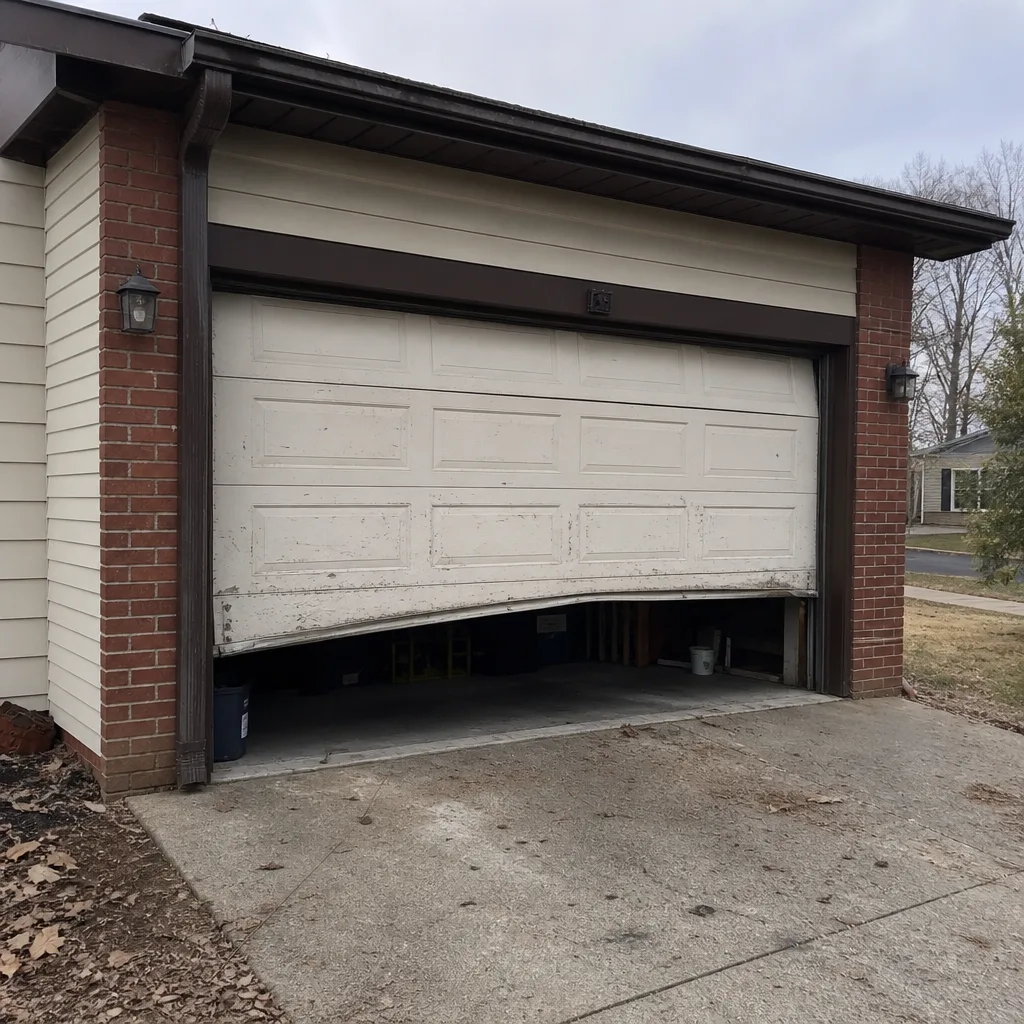 Before
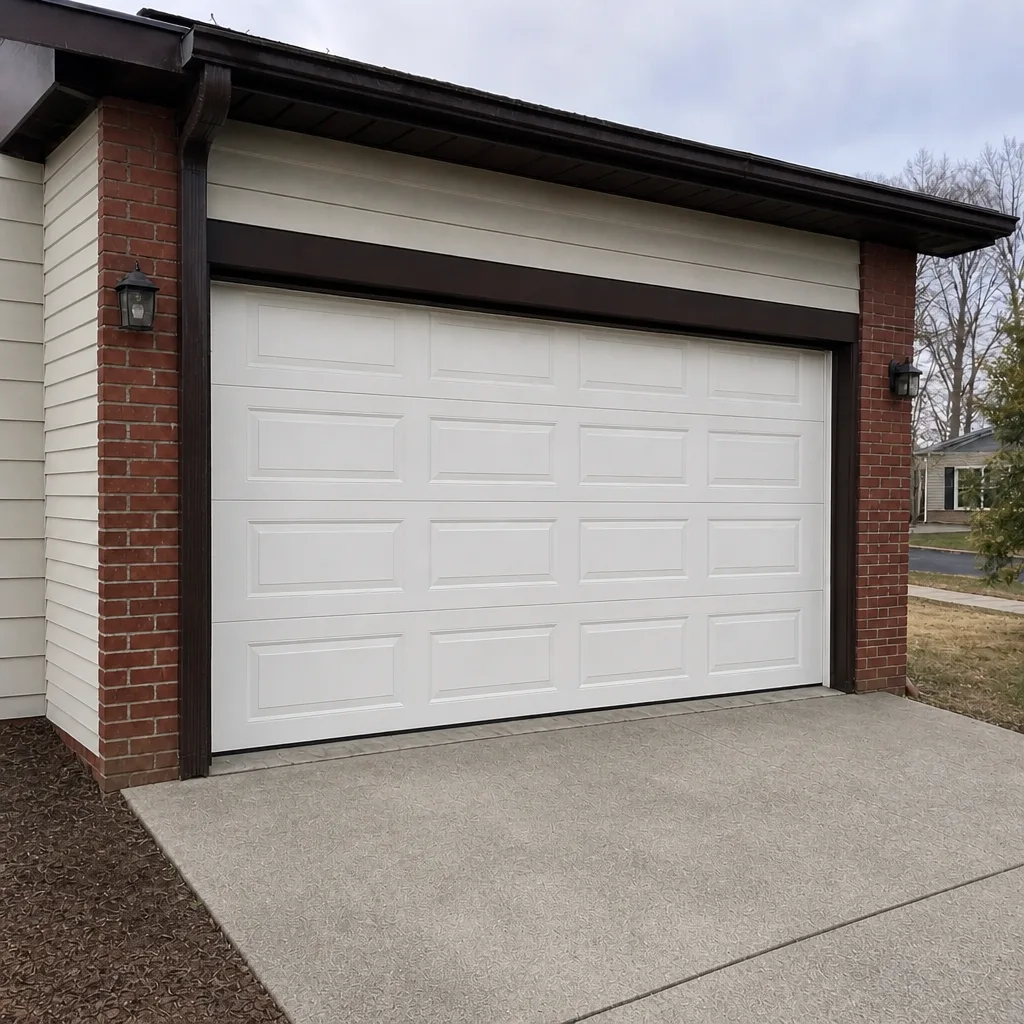 After
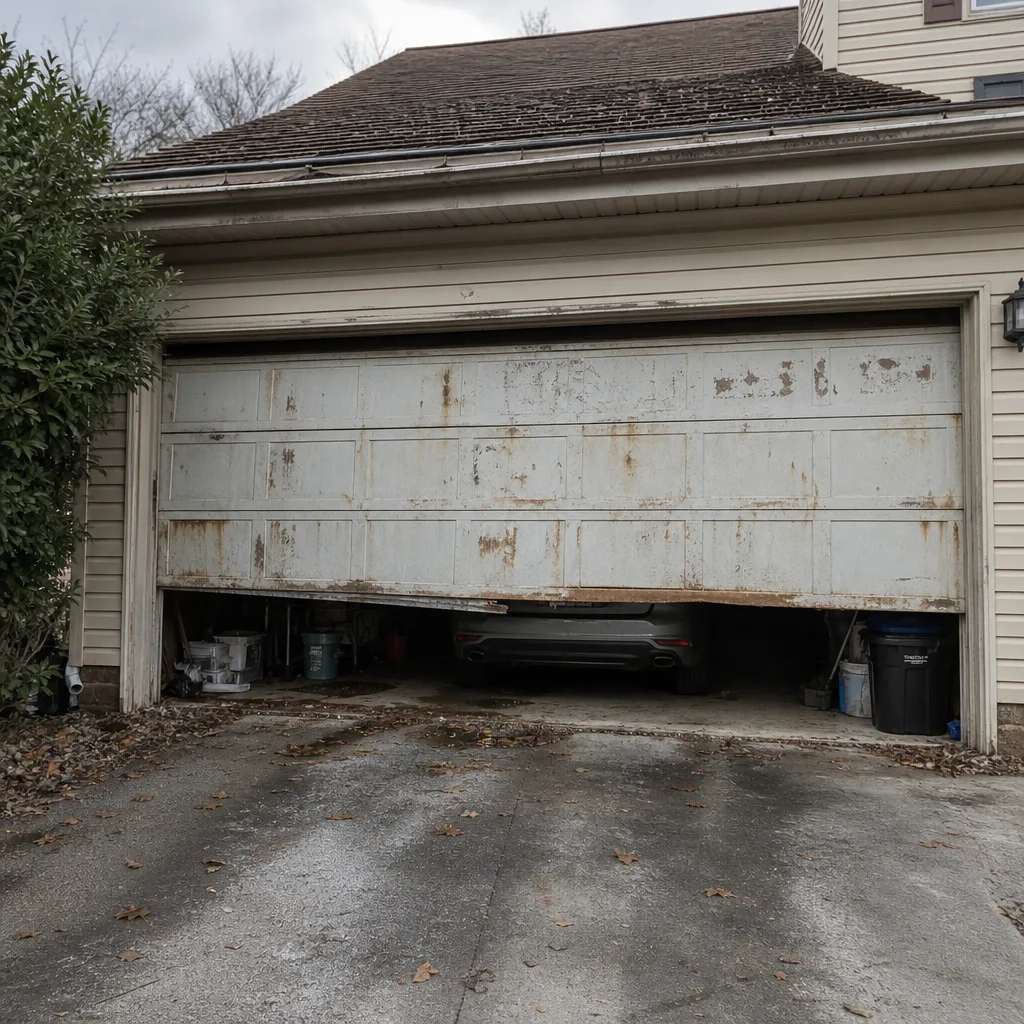 Before
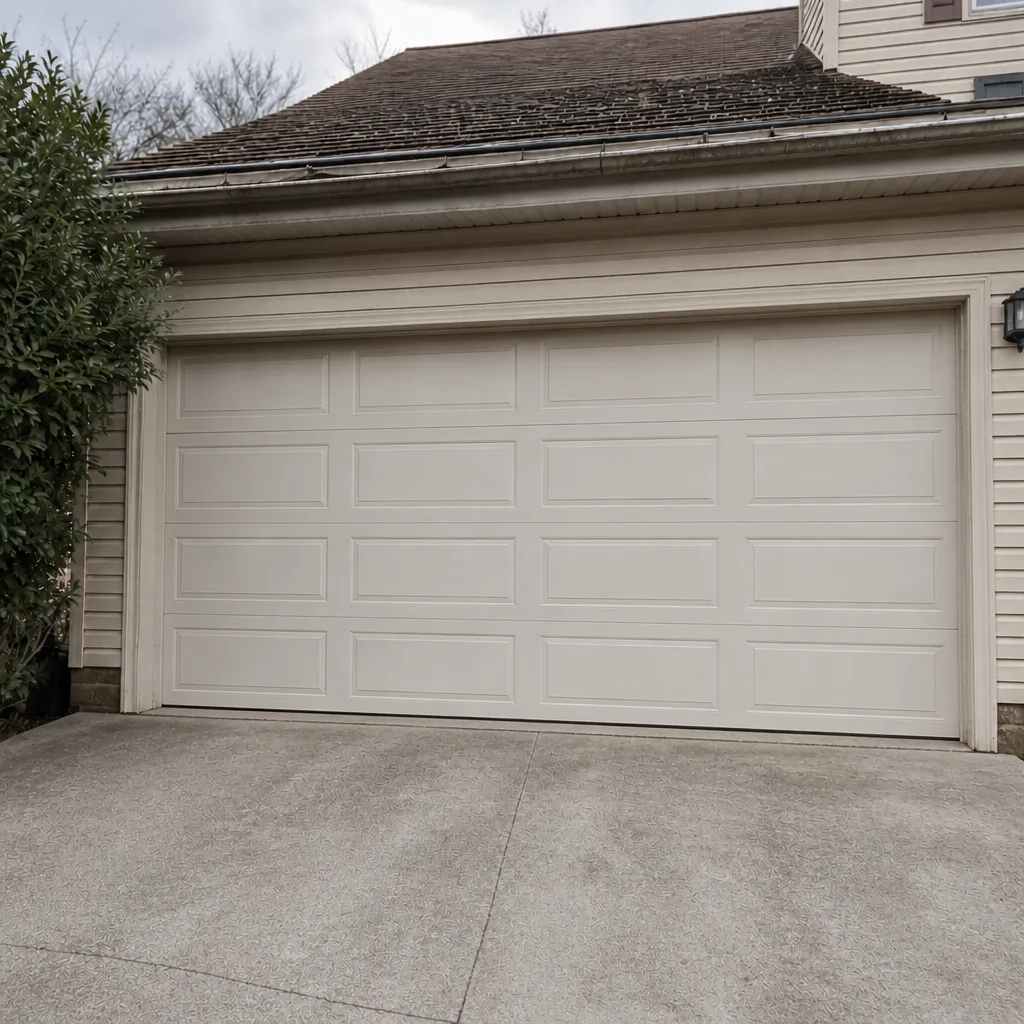 After
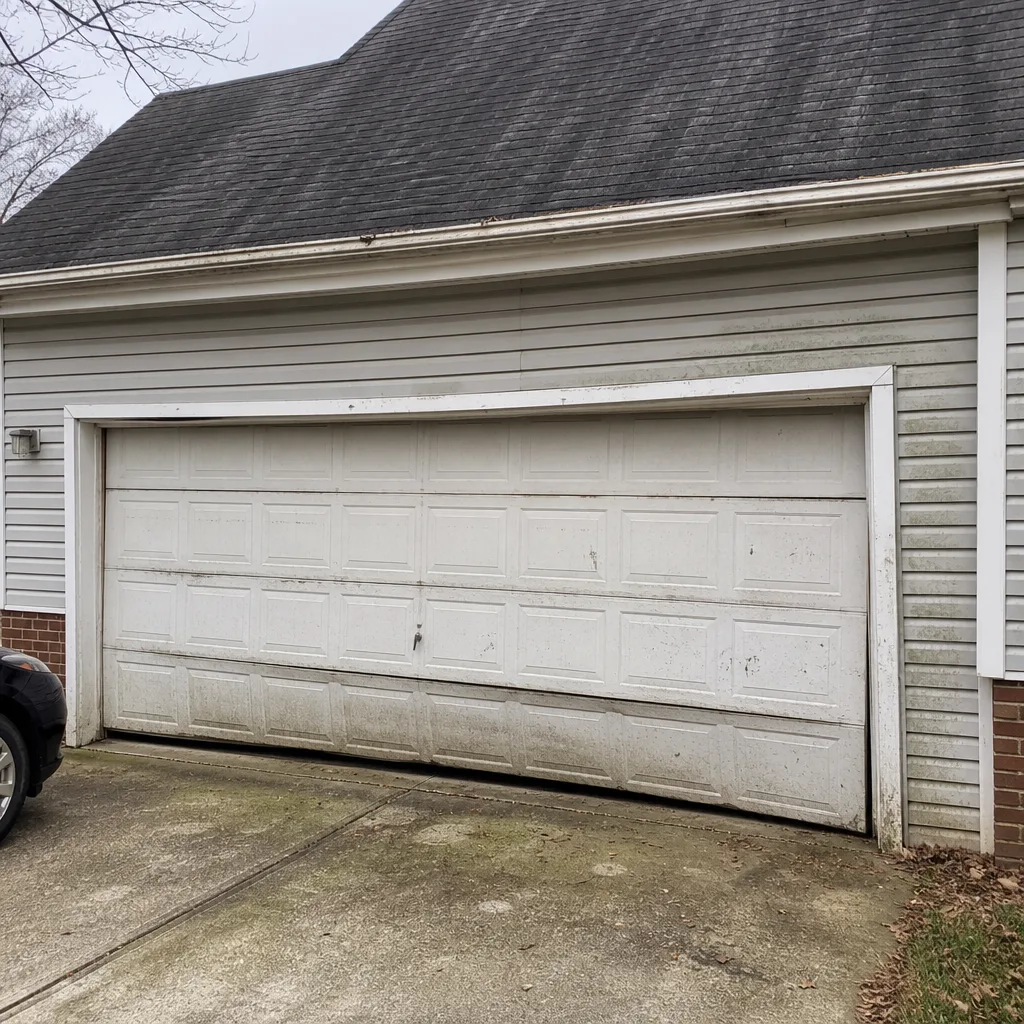 Before
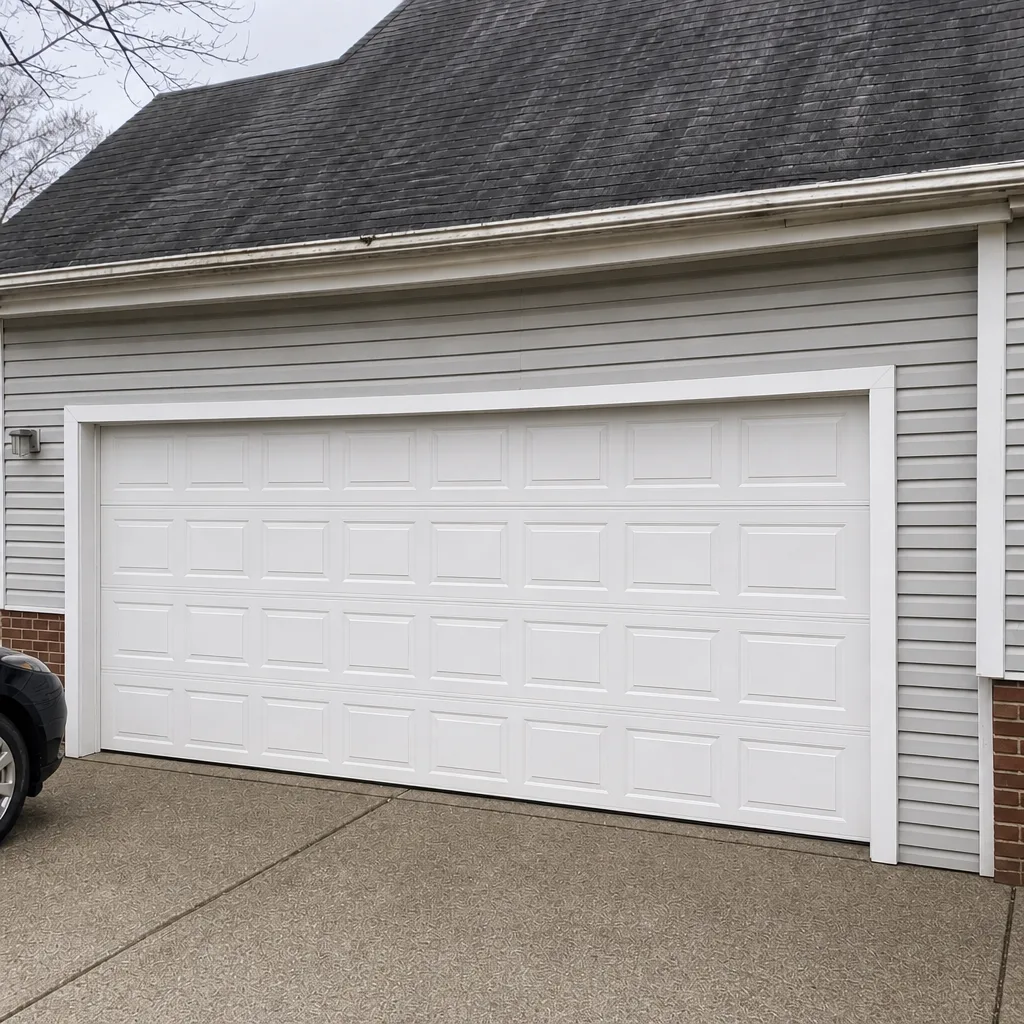 After
When to Call a Professional
Some garage door problems are genuinely homeowner-level: a remote that needs its battery replaced, a sensor that’s been knocked out of alignment, a door track with a loose bolt. Others are not. Spring replacement, cable replacement, and any work on the torsion assembly belong to a trained professional, no exceptions. A torsion spring under tension can cause serious injury, and the tools and technique required aren’t DIY-friendly.
Call a professional when the door won’t move at all, when a spring visibly snaps (you’ll hear it first), when the door hangs crooked, when the opener runs but the door doesn’t move, or when the door reverses unexpectedly on closing. These are the cases where a diagnostic visit pays for itself by preventing a second failure.
Garage Door Repair Centreville offers free estimates in Centreville. Our technicians have up to 14 years of experience with springs, openers, panels, and full door installations, and we work with the major door and opener brands, including LiftMaster, Chamberlain, Raynor, and Craftsman. Call (855) 497-3217 and we’ll get a thorough diagnosis and a clear written quote in your hands before any work starts.
Frequently Asked Questions
Typical garage door repairs in Centreville run from around the low hundreds for a sensor adjustment or opener repair to several hundred for a matched pair of torsion springs, depending on the door weight and the parts needed. Full door replacement is a larger project and is quoted after a measurement visit. The written quote you receive sets the final price, and we walk you through it before any work begins. Call (855) 497-3217 for an exact quote; estimates are free.
Emergency garage door service is available and we treat same-day requests as a priority when a door is stuck open, a car is trapped, or the home is unsecured. Call (855) 497-3217 and describe the problem; we’ll give you a straight answer on timing and pricing before a technician is sent.
Ask the contractor for their license number in writing, then look it up on the Commonwealth of Virginia contractor licensing database. Confirm the license is current and that the classification matches residential or commercial garage door work, as applicable. Also ask for a certificate of general liability insurance and, if they have employees, workers’ compensation coverage. A licensed contractor will produce these documents the same day.
The written quote you receive before work starts is the price for that work. If the on-site diagnosis reveals a different or larger problem, you’ll be quoted a revised price and asked to approve it before any additional work begins. A reputable contractor does not start work at a different number than the one you agreed to. Call (855) 497-3217 for a free estimate.
A diagnostic technician identifies the root cause before quoting: they check spring tension, balance, cable wear, and opener output rather than replacing whatever looks broken. A parts-swapper replaces the part that’s visibly failed without checking why it failed, which is why the same door often breaks again. The five-question checklist earlier in this guide separates the two before you book.
Licensing and insurance are requirements for the contractor performing the work. In Virginia, contractors must be licensed for the scope of work and should carry liability insurance and workers’ compensation. Ask for the license number and insurance certificate before the appointment, and confirm the license status through the state database. A contractor who is properly licensed and insured will not hesitate on those requests.
The Bottom Line
Hiring a garage door contractor in Centreville is a filtering exercise, not a price hunt. Verify the license and insurance before you book. Ask the five diagnostic questions and listen for whether the answers sound like a technician or a salesperson. Demand an itemized written quote before work starts, and confirm the warranty terms in writing. Check reviews for patterns, not stars. Do those five things, and the low-ball service-call ads stop mattering, because you’ll be comparing real quotes from licensed contractors instead of bait prices from unlicensed operators.
Written by the team at Garage Door Repair Centreville.